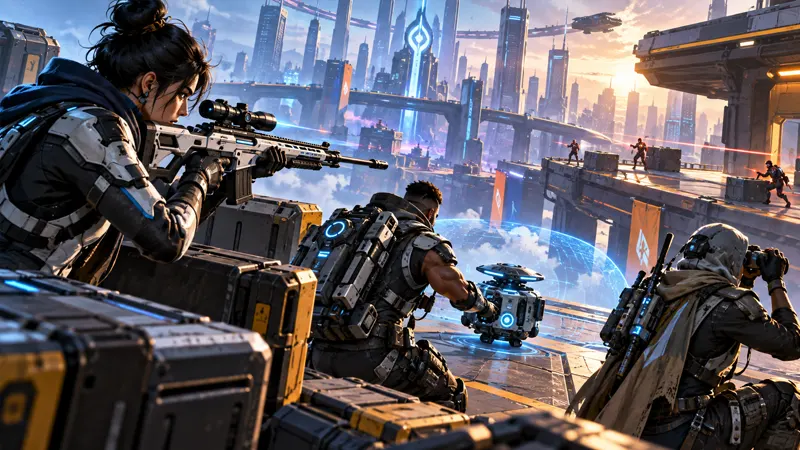
Updated September 18, 2026. The Apex Legends Marked patch reshapes Split 2 with Legend balance changes, more healing loot, three long-range weapon buffs and stronger anti-cheat detection. These nine practical changes explain what players should adjust before returning to Ranked and Wildcard.
Apex Legends Marked patch release date
Split 2 began September 15 across PC, PlayStation, Xbox and Nintendo Switch 2. The midseason update applies the usual fixes and tuning alongside broader systems work, so players should read the official notes before rebuilding favorite loadouts.
Balance updates rarely make every old strategy useless. The best approach is to identify the few changes that affect your regular Legend, weapon class and drop route, then test them in a low-pressure mode before entering Ranked.
9 powerful Apex Legends Marked patch changes
1. Anti-cheat detection expands across platforms
EA says new systems can detect unauthorized controller hardware or software on PC and consoles. Suspected accounts may receive action after review, and playing on a console does not create an exemption. Competitive players should use standard supported inputs and avoid questionable adapters.
2. Healing items become easier to find
Loot availability has been adjusted to provide more healing. This can improve recovery after early fights, but it does not remove inventory decisions. Carry enough cells and syringes for fast resets while preserving room for ammunition and utility.
3. Long-range weapons receive attention
Three long-range options receive buffs in the midseason tuning. That increases the value of controlled sightlines and coordinated focus fire. Squads should expect more pressure while rotating through open ground.
4. Legend balance changes alter team plans
Small ability changes can affect cooldown timing, survivability and composition value. Read the section for your main Legend carefully, then communicate any different timing to teammates rather than assuming established habits still work.
5. Split 2 resets the competitive rhythm
A new split gives players another climb and often changes the mix of opponents in early matches. Avoid judging the full meta from one chaotic session. Strong teams need several days to settle on compositions and routes.
6. Audio fixes deserve serious attention
EA acknowledges how important audio is to match outcomes and includes adjustments among the fixes. Use a familiar headset and default mix before changing multiple audio settings. That makes it easier to identify whether directional cues have improved.
7. Open rotations become more dangerous
Buffed ranged pressure means crossing without cover can cost more resources. Move from object to object, keep a mobility option available and avoid exposing the whole squad at the same time.
8. Support resources can change late fights
Extra healing makes extended engagements more sustainable. Teams that coordinate batteries, med kits and safe reset space may outlast opponents even without winning the opening damage exchange.
9. Old loadouts need fresh testing
A weapon that felt weak before the patch may now fit a useful role. Use the firing range to compare recoil, damage rhythm and optic comfort. Test one change at a time so the result is clear.
Best loadout strategy after the update
Pair a reliable close-range weapon with a medium- or long-range option suited to your aim. The second weapon should support the ranges your squad encounters most often rather than chasing a theoretical damage chart. A marksman or sniper setup has greater value when teammates can capitalize on opening damage.
Carry grenades for teams holding cover and keep enough healing for two engagements. The improved loot pool should help, but late rotations can still punish an inventory filled entirely with ammunition.
How to adapt your Legend choice
Start with a Legend you already understand. Mechanical familiarity helps isolate the effect of balance changes. If the update weakens one part of a kit, look for a new team interaction before abandoning the character completely.
Build around three broad needs: information, safe repositioning and fight endurance. Some squads cover those jobs through abilities, while others rely on disciplined movement and weapon pressure. There is no universal composition for every map.
Ranked preparation checklist
- Read the official notes for your main Legend and two preferred weapons.
- Spend ten minutes in the firing range.
- Play a normal match before risking Ranked points.
- Review open rotation paths affected by long-range pressure.
- Discuss healing and ammunition priorities with the squad.
Browse our latest guides for more competitive gaming help. EA’s official Marked midseason notes remain the authoritative source for exact values and fixes.
Apex Legends Marked patch FAQ
When did Split 2 begin?
Split 2 started September 15, 2026.
Does the anti-cheat update affect consoles?
Yes. EA specifically includes PlayStation, Xbox and Nintendo Switch 2 alongside PC.
Are healing items more common?
The official notes say loot availability was adjusted, including more healing items.
Should every player switch to a sniper?
No. Long-range buffs make ranged pressure more relevant, but the best loadout still depends on map, squad plan and personal accuracy.
Why the midseason patch matters
The Apex Legends Marked patch changes how squads prepare, rotate and recover. The Apex Legends Marked patch also signals stronger enforcement against unsupported input hardware. Players who test ranged weapons, communicate healing needs and avoid exposed rotations will adapt faster.
Final verdict
The Apex Legends Marked patch rewards careful preparation more than panic. Read exact values, test familiar gear and make deliberate adjustments. A stable strategy with one or two smart changes is usually stronger than replacing an entire play style overnight.