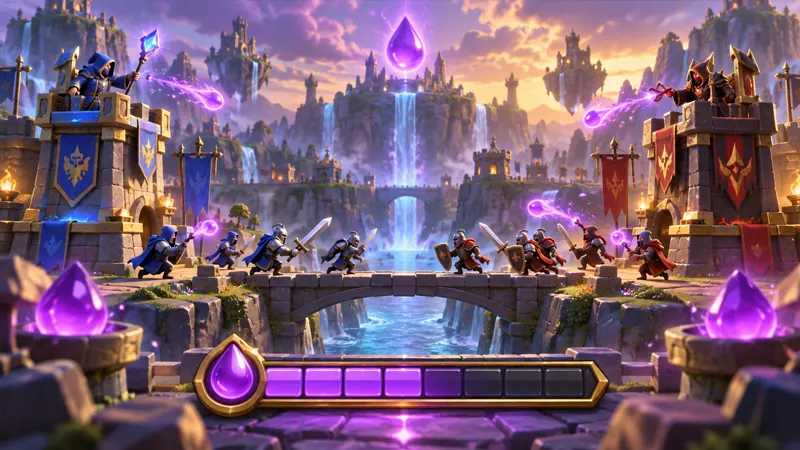
Every card you play creates two outcomes: an immediate effect in the arena and a new resource situation for the next exchange. Players who understand that second outcome turn ordinary defenses into winning counterpushes. Effective Clash Royale elixir management is not about refusing to spend. It is about spending at moments that preserve options and force awkward responses.
Clash Royale Elixir Management Guide
Clash Royale elixir rewards deliberate practice. Use the checklist below as a repeatable plan, then adjust it to your own playstyle instead of changing everything after one difficult match.
You do not need to calculate every number perfectly. Start by recognizing expensive commitments, cheap answers and the moments when either player cannot afford a complete defense.
1. Avoid Leaking Elixir
Sitting at a full bar wastes production, but playing a random card can be equally harmful. Prepare a safe cycle play or begin a planned push before reaching the cap. The goal is purposeful spending, not constant activity.
2. Learn the Cost of Common Cards
Knowing approximate costs lets you judge trades quickly. Begin with the cards in your own deck and the opponents you face most often. Accurate familiarity grows naturally through repetition.
3. Count in Simple Ranges
Instead of tracking an exact total throughout the match, classify the opponent as low, even or ahead. If they commit an expensive tank and support card, they are likely low enough to pressure elsewhere.
4. Defend for Less Than the Attack
A positive trade occurs when cheaper defenders stop a more expensive push. Use tower damage, placement and complementary units to maximize value. Surviving troops then transform the trade into a counterattack.
5. Do Not Overdefend
Once a threat is controlled, extra cards reduce your advantage. Ask whether the tower and deployed defender already solve the problem before adding another unit.
6. Punish Expensive Backline Plays
When an opponent places a costly card behind the King Tower, the investment cannot defend the other lane immediately. Apply measured pressure that demands a response without emptying your own bar.
7. Protect a Small Reserve
Spending everything leaves no answer to a surprise win condition. Keep enough elixir for the opponent’s most dangerous threat unless you are committing to a calculated finishing push.
8. Turn Defense Into a Counterpush
A surviving defender already represents paid-for value. Add support only when it creates a genuine threat. This is usually more efficient than building every attack from zero.
9. Cycle With a Reason
Cheap cards help reach a key answer, but careless cycling can remove that answer when it is needed. Know which card must remain available for the opponent’s win condition.
10. Adjust During Double Elixir
Faster generation supports larger combinations, yet bad trades still matter. Expect heavier pressure and plan sequences rather than dropping every available card into one crowded lane.
11. Review the Trade That Broke the Match
After a loss, find the exchange that left you unable to defend. Was it an expensive spell, unnecessary support unit or failed prediction? Correcting one recurring negative trade can change many future results.
A Simple Counting Drill
For three matches, track only the opponent’s most expensive card. When it appears, note what they played immediately afterward and whether you could pressure the other lane. This limited exercise develops awareness without overwhelming you. Once comfortable, add their main defensive answer to your mental count.
Win the Exchange Before the Tower
Strong Clash Royale elixir discipline creates choices: defend efficiently, counterpush with survivors or pressure when the opponent is low. Focus on purposeful plays and avoid spending simply because a card is available. Explore our Clash Royale guides and consult Supercell’s official support hub or game page for current game information.
Three Elixir Decisions That Win More Matches
Counting is useful only when it changes a decision. Instead of trying to remember a perfect number, classify the situation and choose a response that preserves your next defensive option.
| Match situation | Risky reaction | Stronger decision |
|---|---|---|
| The opponent places an expensive unit behind the King Tower | Immediately stacking every card in the opposite lane | Pressure with a controlled commitment while keeping enough elixir to answer the approaching push. |
| You defend with surviving troops | Adding support automatically because a counterpush looks tempting | Check the opponent’s likely answers first; add support only when it forces value or protects a win condition. |
| Double elixir begins | Playing faster without tracking rotations | Shorten your counting range, watch the opponent’s key counter, and keep a reserve for sudden lane pressure. |
A 10-Match Elixir Practice Plan
- Matches 1–3: Say the cost of every card you play. The goal is accurate recall, not winning every exchange.
- Matches 4–6: Track only whether the opponent is low, even, or ahead. Make one written note after each replay.
- Matches 7–8: Mark every overdefense—any moment when a cheaper response would have protected the same tower health.
- Matches 9–10: Track the opponent’s main defensive counter and predict when it returns to hand.
After ten matches, look for one repeated mistake. Fixing a single habit—such as leaking at full elixir or supporting every counterpush—usually provides more value than changing decks after each loss.
Replay Review Template
For each loss, record the time of the first large negative trade, what you spent, what the opponent spent, and whether your next hand still contained a safe defensive answer. This turns a vague feeling of being “outcycled” into a specific decision you can practice.
How This Guide Was Prepared
The advice focuses on repeatable decision-making rather than a temporary deck list, so it remains useful after balance changes. See how GameWilds researches and verifies guides.
Frequently Asked Questions
What is a positive elixir trade?
It is an exchange where your cheaper cards successfully answer a more expensive enemy investment, leaving you with a resource advantage.
Should I always spend before the bar is full?
Avoid wasting generation, but choose a safe purposeful play. A bad card placed only to prevent leaking can cost more than the leaked amount.
How can beginners count elixir?
Track broad advantages first. Notice expensive commitments and classify the opponent as low, even or ahead before attempting exact counting.